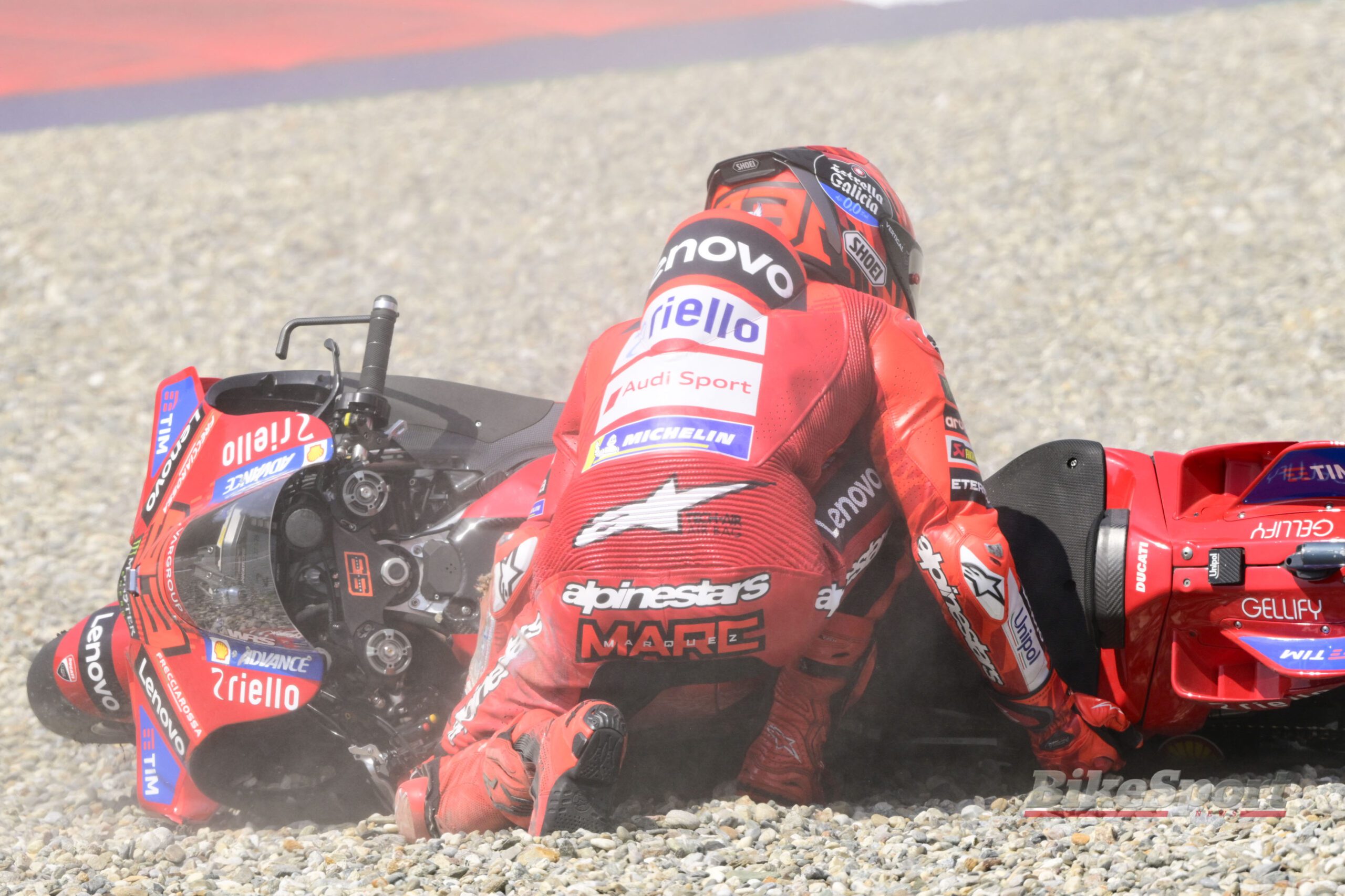
A new regulation has been implemented for the 2026 MotoGP season by the FIM, similar to one that BSB has used since 2012.
The new FIM rule prevents riders from restarting their bike, if its engine has stopped after a crash, in the run-off area after a crash; it must now be done behind the trackside barriers. Repairs and adjustments can be made to the bike after a crash, but this must also be done behind the barriers and can only be carried out by the rider.
If a bike is still running after a crash, riders can remount and continue as in the past, although if marshals reach the bike before it has pulled away and deem it to be in an unsafe condition they can stop the rider from rejoining the track.
The reason for the introduction of the rule – which is applicable to all FIM-sanctioned circuit racing, meaning the Endurance World Championship, for example, in addition to MotoGP and WorldSBK – is to stop riders and marshals from being in the run-off areas after a rider has crashed for extended periods of time during a live session, thereby reducing risk to the marshals and to the rider, or riders, that has just crashed.
BSB introduced a similar rule after the opening round of the 2012 season was cut short following a crash for Pauli Pekkanen at Brands Hatch. The Finnish rider went down in the Supersport race and remounted, but his bike has been damaged and spilled fluid almost the whole way around the Brands Hatch Indy circuit, which had been already drenched by all-day rainfall which then made the track almost impossible to clean.
BSB decided that the best way to prevent a repeat of that incident was to prevent riders from circulating on bikes which could be leaking fluid, and so prevent riders from circulating on damaged bikes. To do that, they implemented a rule that meant a rider could not remount their bike after a crash.
The BSB rule is more strict than the new FIM rule, since any crash means a DNF for a rider, and the reason for its implementation was different, but the effects are similar: in FIM competition, it’s now much harder for riders to rejoin a race or session after a crash.
The FIM’s letter which has communicated the new rule has urged national federations to also implement the protocol, although it admits “that this rule may present some challenges initially, but the overriding reason is to minimise the exposure of our track marshals to danger.”